
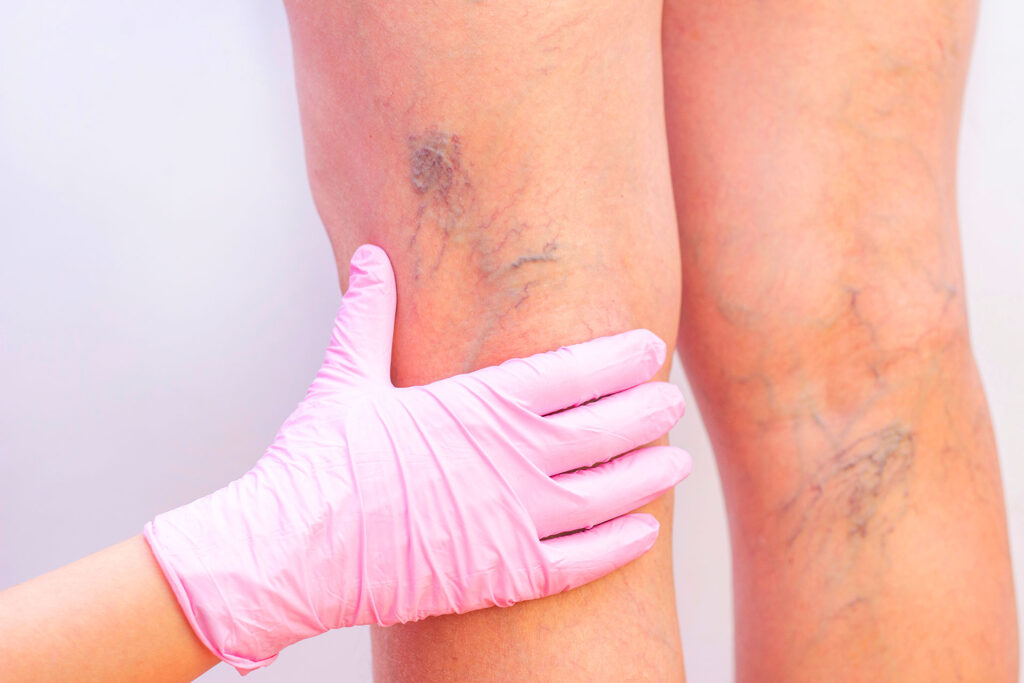
Spider veins don’t usually cause pain. They appear as thin, purple, thread-like lines on the skin that often become noticeable on the legs. Some people are not bothered by them, while others feel self-conscious. In some cases, they can also be an early visible sign of venous insufficiency, even without any symptoms. Fortunately, modern treatments can effectively remove them if desired.
So, could just one treatment be enough to make spider veins disappear?
Sclerotherapy
The physician injects a chemical solution directly into the vein. This solution irritates the vessel lining, causing the walls to swell, stick together, and eventually collapse. Blood then reroutes through nearby healthy vessels. Over the following weeks, the body gradually breaks down the treated vein until it is no longer visible on the surface.
Sclerotherapy has been used since the 1930s and is widely recognized as an effective treatment for venous insufficiency. It can treat both small spider veins and larger varicose veins. Most patients require about three to five sessions, sometimes more depending on the extent of the veins. Each session takes roughly 30 minutes, and patients can usually drive themselves home and return to normal activities immediately.
Possible side effects include:
- Bruising lasting 5–7 days
- Brownish discoloration along the injection site
- Mild tenderness when pressure is applied
These are typically minor and temporary. The treatment is versatile and commonly used in modern management of chronic venous insufficiency.

Venous Ablation
Heat is used to destroy the vein from within. A thin catheter is inserted into the affected vessel, delivering either radiofrequency or laser energy depending on the technology chosen by your vein doctor. This thermal treatment seals the vein walls together permanently. Blood is immediately redirected through healthy nearby veins, while the body gradually absorbs the treated vein over time.
Venous ablation is highly effective for larger varicose veins that contribute to surface spider veins. It targets the underlying cause rather than just the visible symptoms, making it one of the most effective modern treatments for vein disease. The procedure is performed under local anesthesia, so discomfort is minimal.
After treatment, compression stockings are required, typically for at least seven days or longer depending on your doctor’s recommendation. They help support healing and reduce complications. Most patients are able to return to normal activities within one to two days.
ClariVein
This procedure combines mechanical disruption with chemical treatment. A rotating wire is inserted into the vein, where it mechanically agitates the inner lining while simultaneously delivering a sclerosing solution. The mechanical action makes the vein wall more responsive to the chemical agent, resulting in a more complete closure than either method alone. The process is quick, and discomfort is typically minimal. It can be particularly useful for visible red veins and other superficial vein changes associated with deeper venous disease.
Unlike traditional ablation, ClariVein does not require tumescent anesthesia, which involves injecting large amounts of numbing fluid around the vein. Fewer injections can mean less bruising and swelling.
Key advantages include:
- Less soreness compared to traditional ablation
- Reduced bruising and inflammation
- Faster return to normal or vigorous activity
Compression stockings are still recommended, though usually for a shorter duration compared to other methods, especially when treating visible purple veins and superficial vein concerns.
VenaSeal
A medical adhesive is used to seal the vein instead of heat or chemical ablation. A physician injects cyanoacrylate medical glue directly into the vessel, closing the affected vein from within. The adhesive bonds immediately, sealing the vein permanently. Over time, the body gradually absorbs both the treated vein and the adhesive material.
One of the key advantages is that no compression stockings are typically required afterward. Patients can usually resume normal activities immediately, including running, swimming, and weightlifting, with no major restrictions. The VenaSeal procedure usually takes about 15 to 20 minutes. Since no thermal energy is used, surrounding tissues are not exposed to heat damage, and discomfort is minimal. Only the insertion site is numbed, rather than the entire length of the vein, making it suitable for sensitive or smaller veins.
Studies show strong long-term results with low recurrence rates, including in some cases of smaller spider veins.

What Is the Best Approach for Managing Venous Insufficiency?
Vein size helps determine which treatment works best. Small spider veins often respond well to sclerotherapy, while larger varicose veins typically require ablation or VenaSeal. Location also matters, as facial veins may require gentler techniques compared to veins in the legs.
Lifestyle factors also influence treatment choice. If extended downtime or activity restrictions are not practical, options that do not require compression stockings may be more suitable. A vein specialist evaluates each case individually using ultrasound imaging to map the affected veins and identify underlying issues. Treatment is then tailored to the patient’s vascular anatomy rather than a one-size-fits-all approach.
In some cases, a combination of treatments may be recommended. For example, ablation may be used for deeper feeder veins, while sclerotherapy targets superficial spider veins.
Why Action Matters
Spider veins when left unaddressed, spider veins can proliferate. They may branch out, multiply, and new ones can appear over time. What begins as scattered small vessels can gradually develop into a more extensive network. In many cases, these changes are a visible sign of venous insufficiency.
Treatment can help stop progression and remove existing veins, reducing ongoing self-consciousness when looking at your legs. Effective procedures are available today and can produce real, visible results. Delaying treatment does not improve the condition and may allow it to worsen over time.
Take the first step toward healthier veins, consult a specialist now.