
The treatment of vein diseases has evolved significantly over the years, with surgery once being the only available option. Thanks to advancements in minimally invasive techniques, managing vein conditions has become faster, safer, and simpler. Today, office-based procedures guided by ultrasound have proven to provide excellent results for patients.
Sclerotherapy is a procedure in which a sclerosant medication is injected directly into an unhealthy vein. This medication causes the vein wall to collapse and stick together, ultimately sealing off the vein. As a result, blood flow is redirected to healthier veins, improving overall circulation and alleviating symptoms.
This treatment is commonly used for spider veins and varicose veins. Sclerotherapy is an effective option for both small spider veins and larger varicose veins, offering a non-surgical solution to improve the appearance and health of the veins.
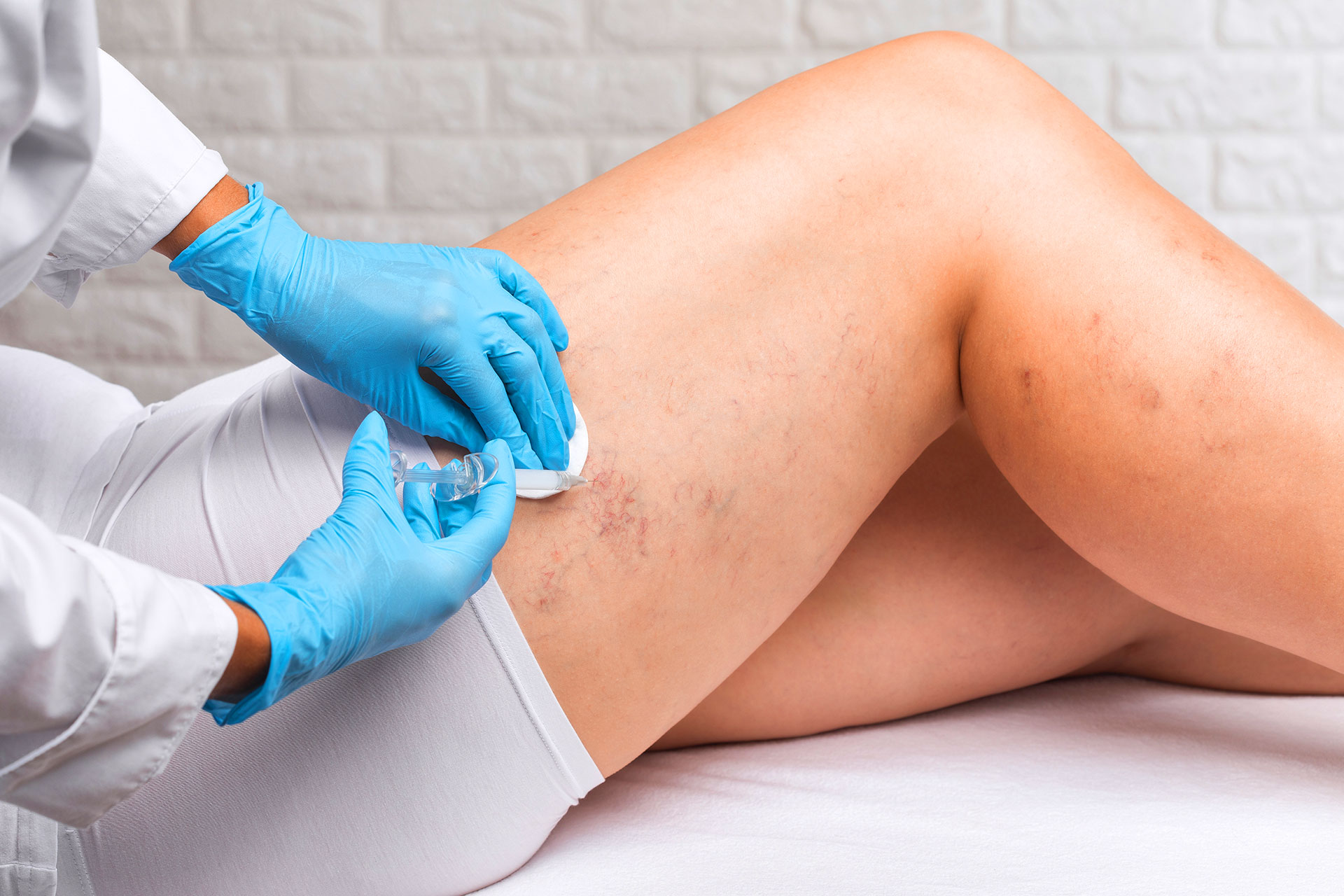
During sclerotherapy, the affected leg is elevated to help empty the vein, ensuring optimal treatment. The vein specialist then uses a fine needle to inject a sclerosant directly into the varicose or spider veins. Only FDA-approved sclerosants are used for safety and effectiveness. After the injection, compression stockings are applied to prevent blood from pooling in the treated vein while standing.
The sclerosant damages the inner lining of the vein, causing it to collapse and seal off. Over time, the vein is replaced by scar tissue and gradually fades from view.
The procedure is typically performed in a clinic or doctor’s office and takes about 10 to 30 minutes, depending on the number and size of veins treated. Afterward, patients are usually advised to wear medical-grade compression stockings for several days to support healing.
Sclerotherapy typically requires just one injection per vein and is considered minimally painful. Some patients may experience mild cramping or a burning sensation at the injection site. Multiple sessions may be required, depending on the severity of the condition.
Superficial veins are treated under direct visualization, while deeper veins may need ultrasound guidance to ensure the sclerosant is delivered accurately to the targeted veins.
The primary benefit of sclerotherapy is that it offers a non-surgical solution to treat varicose and spider veins. The procedure requires minimal preparation, does not need general anesthesia, and typically takes less than 30 minutes to complete. Most patients can resume their regular daily activities immediately after the treatment with no downtime.
Despite its many advantages, sclerotherapy isn’t suitable for everyone. One of its limitations is that it may not be effective for all cases, especially for larger varicose veins. Sclerotherapy is most effective for treating smaller varicose veins and spider veins. In cases of larger veins, it may need to be combined with other treatments, such as radiofrequency ablation or VenaSeal, to achieve the best possible results.
Sclerotherapy comes in two main types: liquid sclerotherapy and foam sclerotherapy. The choice of treatment depends on factors such as vein size, treatment goals, and the extent of the vein disease.
Liquid Sclerotherapy
Liquid sclerotherapy is primarily used for treating small spider veins. In this procedure, a liquid medication is injected directly into the affected vein. It works by causing the vein to collapse and eventually fade over time. This technique is most effective for tiny veins near the skin’s surface.
Foam Sclerotherapy
Foam sclerotherapy is typically used for larger varicose veins. This method involves mixing a small amount of liquid medication with air to create a foam-like substance. The foam spreads more effectively over the vein’s surface, allowing the treatment to target larger veins more efficiently. Foam sclerotherapy is often preferred for more significant vein issues due to its enhanced coverage.