
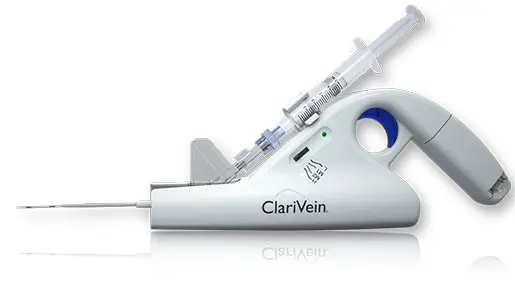
The procedure begins with numbing the skin using lidocaine. A small incision is made, and a ClariVein catheter is inserted into the affected vein. The catheter has a rotating tip that mechanically damages the vein wall while releasing a sclerosant medication. This combination causes the vein to collapse and close, redirecting blood flow to healthier veins with functioning valves.
ClariVein is typically performed in a clinic or doctor’s office and lasts between 10 to 30 minutes, depending on the number and size of the veins being treated. After the procedure, patients are generally advised to wear compression stockings for a few days.
This treatment is usually well-tolerated, with minimal discomfort. Some patients may experience mild cramping or a slight burning sensation at the site. For more severe cases, additional sessions may be necessary.
Treatment for superficial veins can be done visually, while deeper veins may require ultrasound guidance to ensure accurate medication application.
ClariVein offers several benefits over laser or radiofrequency ablation. It typically requires just one entry point, and unlike thermal or laser treatments, it doesn’t use heat or lasers, nor does it rely on medical glue. This makes the procedure virtually pain-free for many patients. ClariVein is minimally invasive, usually lasting 30–45 minutes, and can be performed in an office setting without the need for general anesthesia. Most patients experience little to no downtime, allowing them to return to their normal activities immediately.
However, like all treatments, ClariVein isn’t suitable for everyone. Its effectiveness may vary from patient to patient, and the medication may not work for everyone. Sclerotherapy is often used for treating smaller varicose veins and spider veins, while larger veins might require a combination of treatments like radiofrequency ablation or VenaSeal for the best results.
ClariVein is not ideal for very small veins or veins located in areas with dense arterial supply, such as the feet. Additionally, it may not be covered by all insurance plans.