
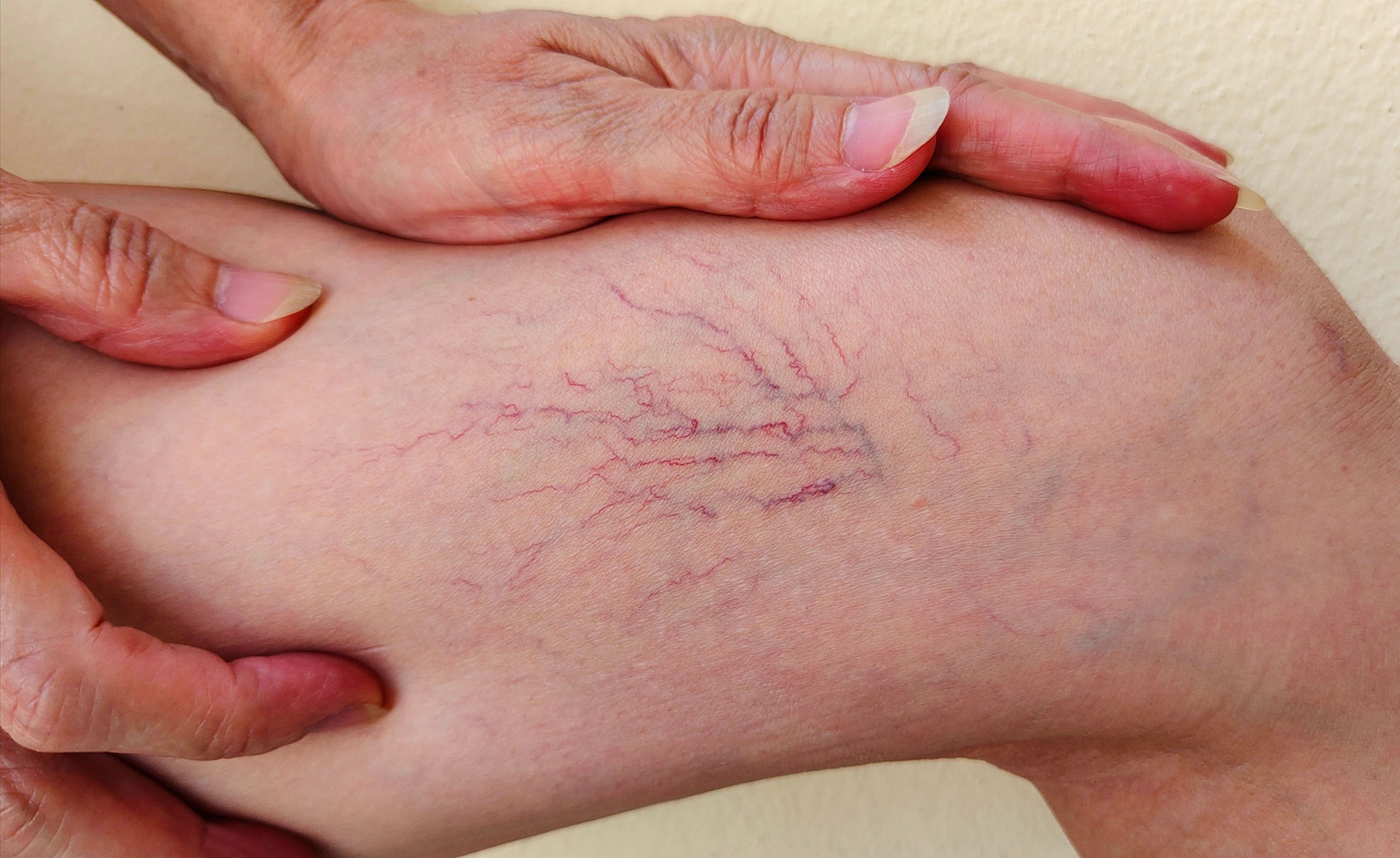
Spider veins are delicate vessels located near the skin’s surface, often looking like twisted branches or webs. They can appear in colors such as red, blue, or purple and are commonly found on the legs and face.
While generally not harmful or painful, spider veins can become a cosmetic concern. Their development can be influenced by factors like genetics, long periods of standing, and hormonal changes, which all play a role in their formation.
Spider veins are primarily a cosmetic concern, appearing as small, visible blood vessels on the skin. While they usually don’t cause pain, some individuals may experience aching or a sensation of heaviness in the legs, particularly after long periods of standing. In some cases, the area around the veins may feel tender. Early intervention can prevent the formation of new veins and help address any underlying vascular issues.
Making certain lifestyle changes can help prevent spider veins from worsening. These include:
During sclerotherapy, a sclerosant solution is injected directly into the affected veins. This solution irritates the vein walls, causing them to stick together, close off, and eventually fade as the body absorbs them.
Sclerotherapy is particularly effective for treating spider veins and helps improve circulation by redirecting blood to healthier veins. While larger varicose veins may require different treatments, sclerotherapy is an excellent choice for smaller veins and can help prevent the development of new spider veins.
After the procedure, wearing compression stockings is recommended to enhance results and minimize side effects such as swelling or discomfort. Sclerotherapy provides a non-surgical approach to improving both the appearance and health of affected veins.
Understanding spider veins involves recognizing their causes, symptoms, and treatment options. With preventive measures and proper medical care, patients can effectively manage this common vascular issue.
Whether through lifestyle changes or medical treatments, there are several ways to improve the appearance of veins and alleviate symptoms related to spider and varicose veins.