
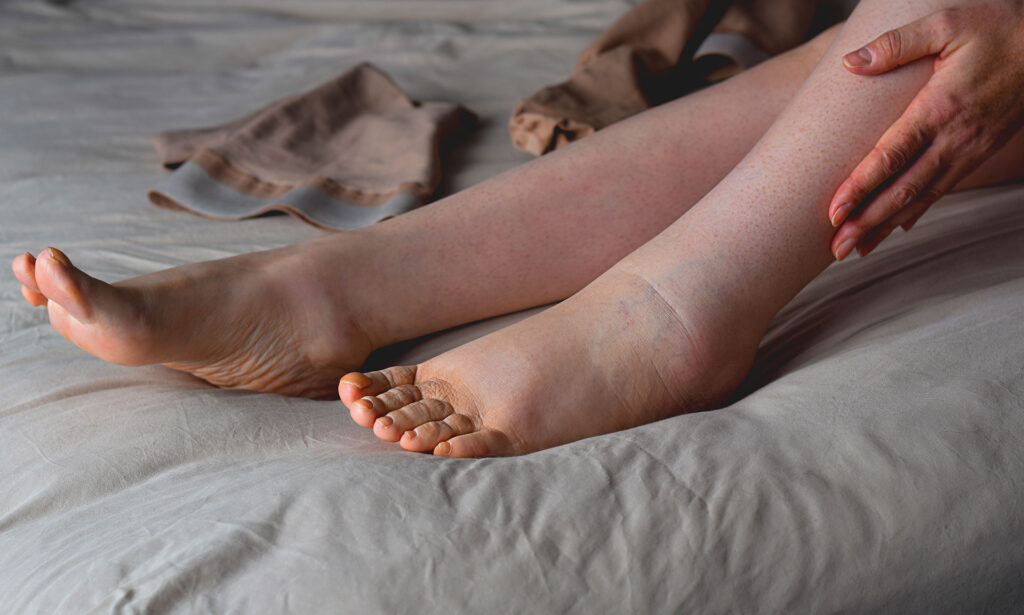
Leg swelling, also known clinically as edema, is often a sign that the venous system is under increased stress. While varicose veins and venous insufficiency are common causes, a thorough medical evaluation is essential to determine the underlying reason before any treatment is started.
What Causes Swollen Legs?
Not all leg swelling is caused by vein disease. An accurate diagnosis is essential.
Leg edema occurs when excess fluid builds up in the tissues of the lower legs and ankles. While venous insufficiency is a common cause, many other medical conditions can produce similar symptoms. Your CURA phlebologist will carefully assess all possible contributing factors before recommending a treatment plan. Conditions that may need to be considered include:
Conditions That Can Cause Leg Swelling
- Venous Insufficiency
- High Blood Pressure
- Heart Failure
- Liver or Kidney Disease
- Prescription Medications
- Lymphatic Dysfunction
- Deep Vein Thrombosis (DVT)
- Prolonged Inactivity
If your leg swelling is primarily caused by a non-venous condition such as heart failure, kidney disease, or lymphatic dysfunction, vein treatment alone is unlikely to significantly improve your symptoms. Your CURA physician will determine the underlying cause and refer you to the appropriate specialist if necessary, ensuring you receive the most suitable care for your condition.
A vascular duplex ultrasound, performed during your initial visit, is an important diagnostic step. It allows your vein specialist to confirm the presence of venous insufficiency, evaluate its severity, and determine how it may be contributing to your swelling and other symptoms.
Know the Difference: Venous Edema vs. DVT
Leg swelling caused by varicose veins or venous insufficiency typically develops gradually over time and often worsens by the end of the day, especially after prolonged standing or sitting.
This is different from swelling caused by deep vein thrombosis (DVT), which usually appears suddenly and may be accompanied by significant pain, warmth, and skin discoloration. DVT is a medical emergency and requires immediate attention.
If you experience sudden, unexplained, or rapidly worsening leg swelling, seek urgent medical care right away.
How Varicose Veins Cause Leg Swelling
Varicose veins are one of the most common causes of chronic leg edema. The process starts when vein valves begin to fail. In healthy veins, valves open to let blood flow upward toward the heart and then close to prevent backflow. When these valves weaken or stop working, blood flows backward and pools in the lower leg veins, a condition known as chronic venous insufficiency.
As venous pressure increases, the superficial veins stretch and bulge, creating the visible twisted veins on the skin. This rising pressure also pushes fluid out of the vein walls into surrounding tissues, where it accumulates as edema. Common associated symptoms include leg heaviness, persistent aching, nighttime cramping, and restless legs.
01
Valve Failure
Vein valves weaken and are no longer able to prevent blood from flowing backward.
Blood Pooling
Blood collects in the lower leg veins due to the force of gravity.
Pressure Rises
Venous pressure increases in the leg, placing strain on the vein walls.
Fluid Leaks
Excess fluid is pushed out of the veins into the surrounding tissue.
Edema Forms
Swelling appears in the ankles and lower legs.
In patients whose leg swelling is caused by venous insufficiency, treating the underlying diseased veins can significantly reduce or even fully resolve the edema. By closing off the faulty vein, pressure in the lower legs decreases, allowing excess fluid that has accumulated in the surrounding tissues to gradually be reabsorbed. Most patients begin to notice meaningful improvement within weeks after treatment.
Minimally Invasive Vein Treatments at CURA
All procedures are performed in-office, with no surgical incisions and no need for a hospital stay.
Radiofrequency Ablation (RFA)
A thin catheter is used to deliver precisely controlled radiofrequency energy to the inner wall of the diseased vein, causing it to contract and permanently close. The procedure typically takes less than 30 minutes and is performed using only local anesthesia. Blood flow is then redirected to nearby healthy veins, helping improve circulation and reduce venous pressure in the lower legs.
VenaSeal
A proprietary medical adhesive is delivered through a catheter to close the diseased vein from the inside. Unlike thermal ablation, VenaSeal does not require tumescent anesthesia, making the procedure especially comfortable for patients. Most patients experience immediate relief and are able to return to normal activities the same day.
Sclerotherapy
A sclerosant solution is injected directly into the affected vein, causing irritation of the vein wall so it collapses and seals shut. It is used to treat both varicose and spider veins, with the concentration and technique adjusted based on the size and type of vein being treated. Multiple sessions may be needed to achieve full clearance.
Foam Sclerotherapy
For varicose veins that are not suitable candidates for thermal ablation, ultrasound-guided foam sclerotherapy delivers a specially prepared sclerosant foam under real-time imaging guidance. This allows for precise, targeted treatment of tortuous or deeply located veins.
ClariVein
For varicose veins that are not suitable candidates for thermal ablation, ultrasound-guided foam sclerotherapy delivers a specially prepared sclerosant foam under real-time imaging guidance. This allows for precise, targeted treatment of tortuous or deeply located veins.
Frequently Asked Questions
Your questions about leg swelling and vein treatment, answered by our board-certified specialists.
It depends entirely on the underlying cause of your swelling. If a vascular duplex ultrasound confirms that venous insufficiency is the primary cause, treating the diseased veins can significantly reduce or even fully resolve the edema. However, if the swelling is due to a non-venous condition such as heart failure, kidney disease, or lymphatic dysfunction, vein treatment alone is unlikely to provide lasting improvement. This is why a comprehensive evaluation is always performed before recommending any procedure.
Most patients begin to notice a reduction in leg swelling within two to four weeks after treatment. Full improvement may take several months as the treated vein is gradually reabsorbed and circulation normalizes. Wearing prescribed compression stockings during the recovery period can help speed up the process and improve overall results.
When leg swelling is documented as a symptom of medically confirmed venous insufficiency, treatment is often covered by major insurance plans as a medically necessary procedure. Our team at CURA Vein Centers verifies your insurance benefits before your visit and provides a clear breakdown of any out-of-pocket costs. We do not believe in surprise billing.
Venous insufficiency causes swelling that develops gradually over time, often worsening throughout the day and improving overnight with leg elevation. In contrast, swelling from deep vein thrombosis (DVT) tends to appear suddenly, usually in one leg, and is often accompanied by significant pain, warmth, redness, and skin discoloration.
DVT is a medical emergency that requires immediate attention. If you experience sudden, unexplained leg swelling, seek emergency care or contact a healthcare provider right away.
Yes. Wearing graduated compression stockings, elevating your legs above heart level for 20 to 30 minutes several times a day, avoiding prolonged periods of standing or sitting, and staying physically active with low-impact exercise such as walking can all help reduce venous pressure and manage swelling in the short term.
These measures are not a replacement for medical treatment, but they can provide meaningful symptom relief while you await your procedure.
Gravity plays a central role in leg swelling. When you stand or sit for long periods, blood and fluid naturally collect in the lower extremities. In healthy veins, valves and the muscle pump system efficiently return this blood to the heart. In venous insufficiency, these mechanisms are weakened, allowing fluid to build up throughout the day.
Lying down and elevating the legs reduces the effect of gravity, allowing excess fluid to drain back into circulation. This is why swelling often improves overnight.