What Causes Spider Veins?
Understanding the root cause is the first step toward effective, long-lasting treatment.
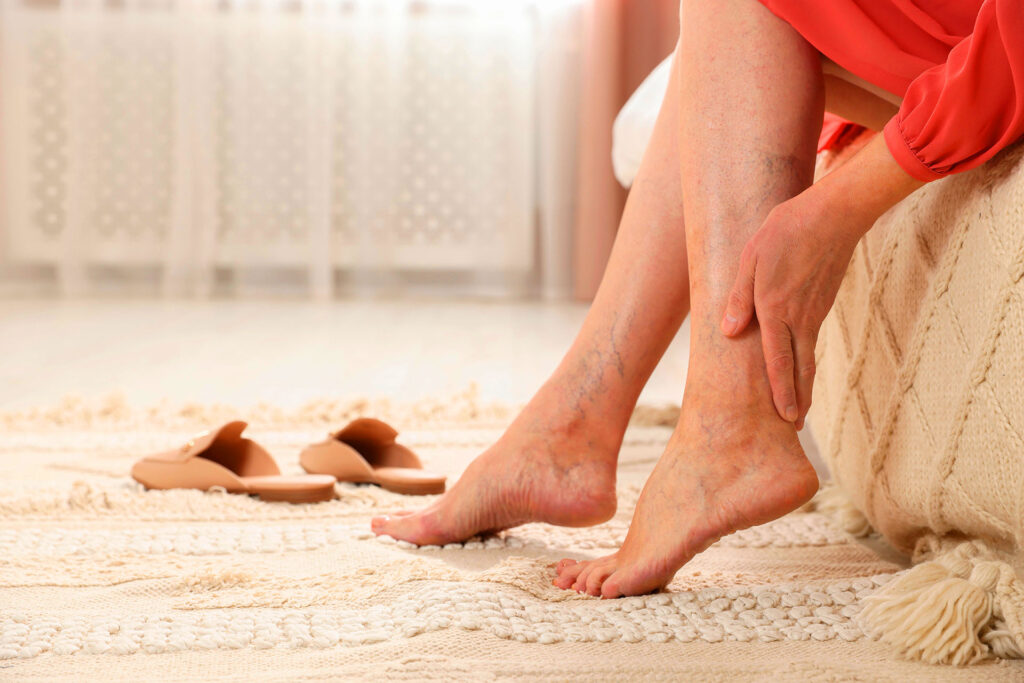
The venous system contains up to 70% of the body’s blood volume at any moment. Blood is carried back to the heart through a coordinated network of one-way valves and muscle pumps. When vein walls weaken or valves become dysfunctional, blood begins to pool in the lower limbs under the force of gravity. This rising pressure causes superficial veins to stretch and expand, eventually forming the fine, web-like patterns visible on the skin’s surface. The following risk factors can significantly increase the likelihood of developing spider veins.
Family History
Genetics is one of the strongest predictors of vein disease. If a parent has had spider or varicose veins, your risk of developing them is significantly higher.
Prolonged Standing or Sitting
Occupations that involve long hours of standing or sitting can increase pressure in the veins of the lower legs over time.
Advancing Age
With age, vein walls and valves naturally become less elastic, which makes venous insufficiency increasingly common after the age of 40.
Excess Body Weight
Excess body weight increases sustained pressure on the venous system, which can speed up valve wear and dysfunction.
Pregnancy
Hormonal changes and increased blood volume during pregnancy place added stress on the leg veins, which can often trigger their first appearance.
📌 Important: Treat the Cause, Not Just the Surface
Primary Spider Vein Treatments in Wayne, NJ
Two highly effective first-line treatment options are available. The best choice depends on the size and location of your veins, as well as your skin type and overall condition.
Sclerotherapy
Gold Standard
Sclerotherapy is one of the most widely recommended and clinically proven treatments for spider veins on the legs. A sclerosant solution is injected directly into targeted veins using an ultra-fine needle, often guided by direct visualization or infrared light.
At CURA, polidocanol is used as the preferred sclerosant, known for its safety and effectiveness, in concentrations ranging from 0.25% to 1% depending on the size of the vein being treated. The solution works by irritating the vein wall, causing it to collapse and seal shut. Over the next two to eight weeks, the treated vein gradually breaks down and is reabsorbed by the body.
A single session typically leads to 50–60% improvement. Most patients achieve complete or near-complete clearance after two to three sessions, with no anesthesia and no downtime required.
No downtime
50–60% improvement per session
Polidocanol-based treatment
In-office procedure
Laser Therapy
Fine Veins
Laser treatment uses a precisely focused beam of light energy that is selectively absorbed by hemoglobin within the blood vessel. The heat generated causes the vein to contract and seal shut, after which the body gradually clears it over several weeks.
Laser therapy is especially effective for very fine spider veins, veins in hard-to-inject areas such as the ankles or feet, and for patients who prefer to avoid needles. It can also be a good option for those with sensitivity to injectable sclerosant medications.
Multiple sessions may be needed to achieve full clearance, and mild redness or temporary discoloration may appear in the treated area during healing.
No needles required
Ideal for fine veins
Effective for ankle and foot areas
Non-invasive treatment
Additional Minimally Invasive Treatments Also Available
For patients who have varicose veins or confirmed venous insufficiency in addition to spider veins.
Radiofrequency Ablation
VenaSeal
ClariVein
Foam Sclerotherapy
Ambulatory Phlebectomy
Why Choose CURA Vein Centers in Wayne, NJ?
Serving patients throughout Passaic County and nearby communities with board-certified vein care.
Frequently Asked Questions
Common questions about spider vein treatment in Wayne, NJ, answered by our specialists.
There is no single universal answer, as treatment depends on the size, location, and depth of the veins, as well as individual patient factors. Sclerotherapy is typically preferred for spider veins on the legs because of its proven effectiveness and ability to treat multiple veins in one session. Laser therapy is often better suited for very fine veins or areas that are difficult to inject. At CURA, your physician evaluates both options and recommends the most appropriate treatment for your specific condition.
One sclerotherapy session typically results in about 50–60% improvement in the treated area. Most patients with moderate spider veins achieve full or near-full clearance after two to three sessions, usually spaced four to six weeks apart. Those with more extensive vein networks may require additional treatments. Your physician will provide a personalized timeline during your initial consultation based on the extent of your veins.
Most patients describe sclerotherapy as mildly uncomfortable rather than painful, often comparing it to a light pinprick with each injection. Laser treatments are typically felt as a brief warmth or snapping sensation on the skin surface. Neither procedure usually requires anesthesia. Any mild redness, bruising, or swelling in the treated area generally resolves within one to two weeks.
Purely cosmetic spider vein treatments are generally not covered by insurance. However, if spider veins are associated with documented symptoms such as leg pain, swelling, or heaviness, or if an underlying venous insufficiency is identified on ultrasound, the evaluation and any medically necessary treatment may be covered by your insurance plan. At CURA, our team verifies your benefits in advance so you know exactly what to expect before any procedure.
Treated veins are permanently closed and do not return. However, new spider veins can still develop over time if underlying risk factors remain, such as genetics, hormonal changes, or prolonged standing. Wearing compression stockings, staying active, and maintaining a healthy weight can help slow the formation of new veins after treatment.
For sclerotherapy, avoid applying lotion or oil to your legs on the day of treatment and wear loose, comfortable clothing. You may also be advised to temporarily avoid certain medications, such as blood thinners or anti-inflammatory drugs, in the days leading up to your appointment. For laser treatments, it is important to avoid sun exposure to the treatment area for at least two weeks prior. Your physician will provide a complete pre-treatment checklist during your consultation.