
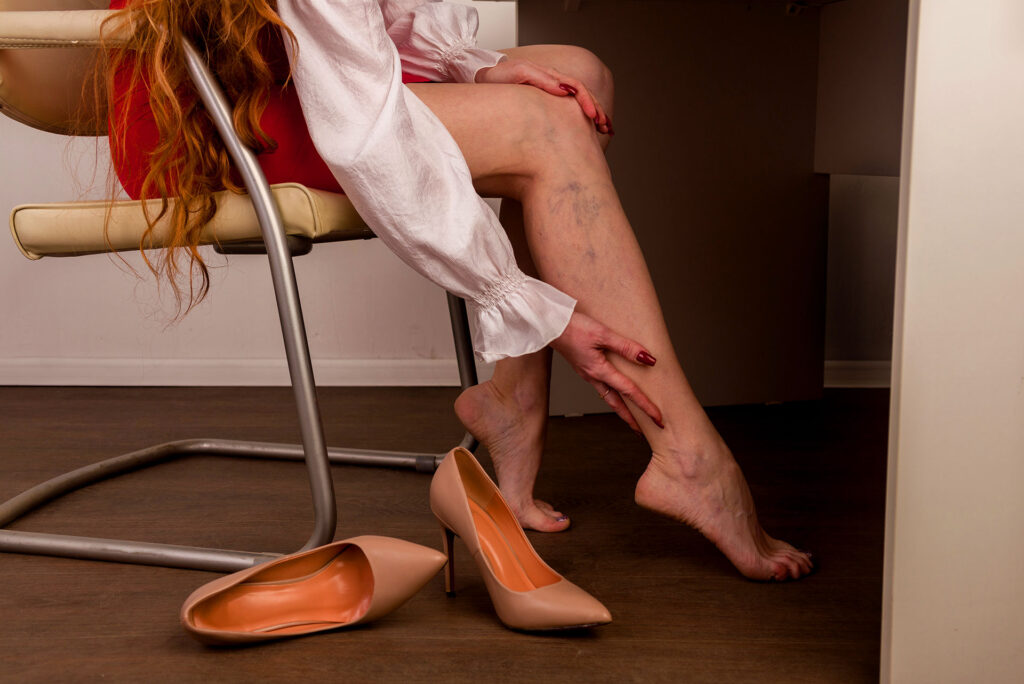
Bulging and varicose veins can look concerning. That’s not even the most important part, though. What truly matters is when these twisted vessels begin showing warning signs that circulation is declining and complications may follow. Some symptoms require attention.
Why Do My Legs Feel So Heavy in the Afternoon?

Why Do My Ankles Swell at Night?
Occasional ankle swelling after a long day is common.
But when your lower legs regularly swell by evening and stay puffy even after elevating them, it may point to an underlying issue like varicose veins. When vein valves weaken, fluid can leak into surrounding tissues instead of circulating properly, leading to persistent swelling.
Look for patterns like:
- Swelling that starts at the ankles and moves upward
- Symptoms that worsen later in the day
- One leg appearing more swollen than the other
A simple check: press your thumb into the swollen area. If the skin stays indented for several seconds, it may indicate edema (fluid retention).
Ongoing swelling is not something to ignore. Over time, it can affect skin health and signal circulation problems. Early attention can make management easier and help prevent progression.
Why Is My Leg Skin Changing?
Skin changes around problem veins can develop gradually. You might notice dark patches, brownish or rust-colored, that spread across the ankles or up the calf. The skin may also become thinner, shinier, or feel tighter than usual. In some cases, dry, itchy, or irritated areas can appear and may not improve with typical skincare.
These changes are often linked to poor circulation. When blood flow is impaired, the skin may not receive enough oxygen and nutrients, which can weaken the tissue over time.
Watch for signs such as:
- Firmness or hardening around the ankle
- Discoloration spreading upward from the foot
- Areas that feel warm or sensitive to touch
If left unaddressed, these changes can increase the risk of venous ulcers, open sores that can be slow to heal and prone to infection. Timely varicose veins treatment addresses the early evaluation and appropriate vein treatment can help improve circulation, protect skin health, and reduce the risk of complications.

Why Do My Legs Burn or Cramp?
Varicose veins can cause more than just a dull ache. Some people experience sharper, burning sensations that seem to follow the path of the vein. This discomfort may come and go or worsen with activity, often linked to inflammation and increased pressure in veins that aren’t functioning properly.
Nighttime leg cramps can also occur. You might wake up with a tight, painful contraction in the calf that takes time to ease with stretching or massage.
These types of symptoms can indicate that the issue is affecting more than just appearance and may benefit from medical evaluation.
Legs That Won’t Settle Down
You may find it hard to get comfortable no matter how you position your legs. They can feel restless, twitchy, or unsettled, especially in the evening when you’re trying to relax. This urge to move can become persistent, making it difficult to stay still even when you’re tired.
Restless sensations in the legs are sometimes associated with circulation issues, including venous insufficiency. When blood flow is not optimal, it may contribute to irritation of surrounding tissues and nerves, which can trigger that need to constantly move or reposition.
These symptoms can disrupt sleep and leave you feeling fatigued during the day. If they occur frequently or interfere with rest, it may be helpful to have them evaluated as part of an overall assessment of vein and circulation health.
How to Get Rid of Varicose Veins
Delaying care for varicose veins can allow symptoms to gradually worsen. What starts as occasional heaviness may become more persistent discomfort, and in some cases progress to chronic pain, skin changes, or even slow-healing wounds. Early evaluation and appropriate vein treatments can help interrupt this progression before it becomes more difficult to manage. Addressing vein issues sooner often leads to simpler treatment options, shorter recovery times, and better overall outcomes.
If your legs are showing consistent signs of discomfort or change, it may be worth having them assessed before the condition advances further.
Frequently Asked Questions
Why do my legs feel heavy in the afternoon but fine in the morning?
Throughout the day, gravity pulls blood downward, and if vein valves are weakened, blood can pool in the lower legs. After a night of lying down, circulation resets, so mornings often feel normal. By afternoon, the buildup can lead to that heavy sensation.
Can restless legs at night be related to varicose veins?
In some cases, yes. Circulation issues may contribute to uncomfortable sensations like restlessness or a “crawling” feeling in the legs. Addressing underlying venous insufficiency can sometimes help improve these symptoms.
At what point do varicose vein symptoms become an emergency?
Seek immediate medical attention if you experience spontaneous or heavy bleeding from a vein, sudden significant swelling in one leg, or skin breakdown with open sores. These can be signs of more advanced or urgent complications.
Don’t ignore the signs, consult a vein specialist now.