
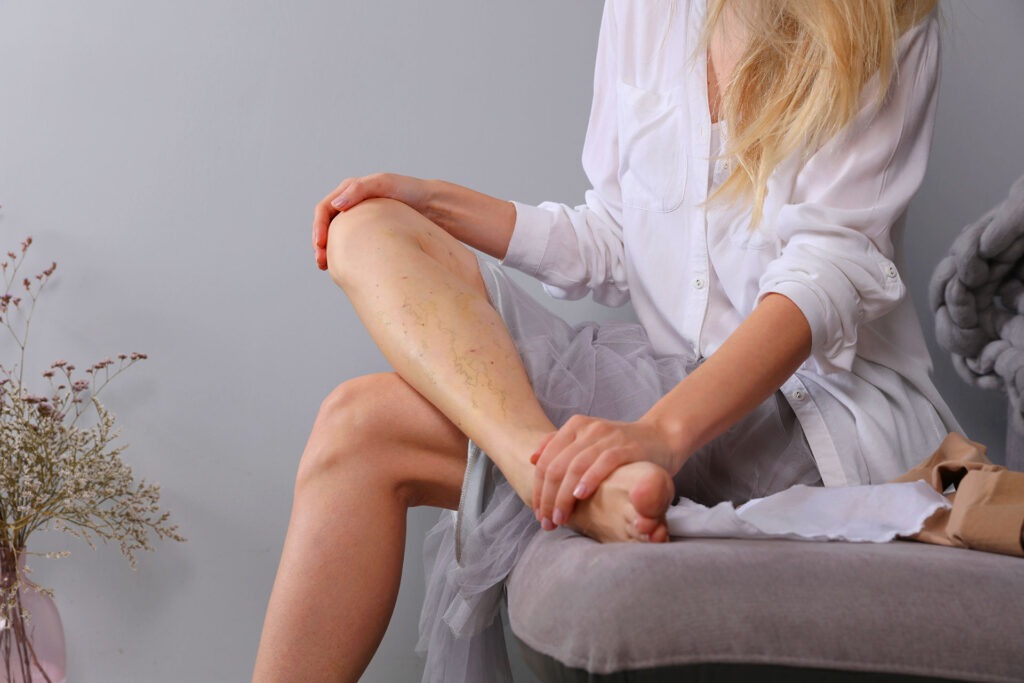
Visible leg veins can feel a little dramatic. One day your legs look smooth and unremarkable, and the next they seem to show blue branches, purple twists, or fine red lines like a map you didn’t ask for. Some people also notice bulging veins that aren’t clearly varicose, which can still reflect underlying circulation changes. Before assuming the worst or ignoring it completely, it helps to group visible veins into two categories: temporary changes that come and go, and more persistent veins that gradually become more noticeable over time. This is often one of the first distinctions a vein specialist or phlebologist considers when evaluating vein changes beneath the surface.
A quick gut-check first
Sometimes visible veins are simply your body doing normal things. It’s common to wonder, why are my veins popping out? But the explanation is often harmless. Veins can appear more prominent when:
- You’ve just exercised
- It’s hot outside, or you’ve been in a warm environment
- You have a thinner frame or less subcutaneous fat
- You’re aging and the skin becomes thinner and less elastic
This is often a “spotlight effect”, the veins haven’t changed, but their visibility has.
However, if veins are bulging, raised, twisting, or accompanied by symptoms, the cause may be more structural and persistent.
What a phlebologist sees under the surface
Leg veins work against gravity, moving blood from the feet back toward the heart. To do this, they rely on small one-way valves that prevent backflow. When these valves weaken, blood can begin to pool in the lower legs, increasing pressure and gradually stretching the veins closer to the skin. This slow progression often explains why veins become more visible even without pain or other obvious symptoms.
The most common patterns include:
-
Venous insufficiency
Many visible vein changes begin here. When the valves inside the veins weaken, blood flows backward and pools. Over time, pressure builds, veins expand, and they move closer to the skin’s surface, becoming more noticeable.
-
Varicose vein development
With ongoing pressure, some veins stretch beyond their ability to recover. They become enlarged, twisted, and more irregular in appearance. These veins often look more prominent later in the day, after prolonged standing or activity.
-
Age-related changes
As we age, both skin and veins change. Vein walls lose some elasticity, valves become less efficient, and the skin becomes thinner. Even healthy veins may appear more visible due to reduced tissue support.
-
Pregnancy-related circulation shifts
During pregnancy, increased blood volume and pressure on pelvic veins can slow blood return from the legs. As a result, veins may widen and become more visible, often progressively throughout pregnancy.
Additional factors that can temporarily increase vein visibility include:
-
Temperature and physical exertion
Heat causes veins to dilate, while exercise increases blood flow—both can make veins more noticeable for a short period.
-
Inflammation within the vein
Knowing When Concern Becomes Necessary?
Not every visible vein is a cause for concern. However, when vein changes are accompanied by aching, heaviness, swelling, or changes in skin color, it may be worth consulting a vein specialist to evaluate for underlying circulation issues. At CURA Medical Group, specialists assess whether these signs are within normal variation or suggest venous insufficiency. The goal is to understand what is happening beneath the surface and determine whether further evaluation is needed or if vein treatments is the appropriate next step.
Frequently Asked Questions
Why do leg veins suddenly look more visible?
This can happen due to heat, exercise, aging, or weakened vein valves. Temporary changes are common, but veins that remain prominent or are accompanied by symptoms may indicate an underlying issue.
Are bulging leg veins always varicose veins?
Not always. Some bulging veins are temporary and related to activity or body composition. Varicose veins are typically raised, twisted, and persistent, and may appear more noticeable by the end of the day.
When should I see a vein specialist?
If visible veins are accompanied by aching, heaviness, swelling, or skin changes, it is worth getting evaluated. Early assessment can help determine whether the changes are normal or related to an underlying circulation condition.
Give your legs the care they deserve, book a consultation now.