
Have you ever glanced down at your wrists, arms, or legs and wondered, “Why are my veins blue when my blood is supposed to be red?” You’re not alone. This common question puzzles millions of people, and the answer involves a fascinating mix of biology, physics, and how our eyes perceive color. The truth is, your veins aren’t actually blue at all, but the science behind why they appear that way is genuinely intriguing.
The Quick Answer: Why Are My Veins Blue?
Your veins appear blue due to the way light interacts with your skin and the blood vessels beneath it. Despite popular belief, the blood inside your veins is not blue; it’s always some shade of red. The blue appearance is essentially an optical illusion caused by how different wavelengths of light penetrate and reflect off your skin.
When light hits your skin, certain wavelengths (like red) are absorbed by your tissues and blood, while shorter wavelengths (like blue) are more easily reflected back to your eyes. This selective reflection creates the blue or greenish tint you see when looking at the veins close to your skin’s surface.
The Science of Light, Skin, and Vein Color
To truly understand why your veins look blue, we need to dive a bit deeper into the physics of light absorption and reflection. Visible light is made up of multiple wavelengths, each corresponding to a different color in the spectrum.
How Light Penetrates Your Skin
Different colors of light penetrate skin to varying depths:
- Red light (longer wavelengths) penetrates deeper into the skin and is absorbed by hemoglobin in your blood.
- Blue light (shorter wavelengths) doesn’t penetrate as deeply and tends to scatter and reflect back to the surface.
- Green light sits between these extremes, sometimes contributing to the greenish hue some veins display.
Because red wavelengths get absorbed before they can bounce back to your eyes, what you end up seeing is the blue light being reflected from the area around the vein, creating the illusion of a blue vessel.
The Role of Hemoglobin
Hemoglobin, the protein in red blood cells responsible for carrying oxygen, plays a major part in this color illusion. Oxygen-rich blood flowing through your arteries is bright red, while oxygen-depleted blood returning through your veins is a darker, deeper red, sometimes appearing almost maroon. But it’s never blue.
Why Some People Have More Visible Blue Veins Than Others
If you’ve noticed that your veins seem more prominent than your friend’s or family member’s, several factors could be at play. Vein visibility varies dramatically from person to person, and it’s not always a cause for concern.
1. Skin Tone and Thickness
People with fair or thin skin typically have more visible veins because there’s less tissue to obscure them and less melanin to absorb light. Those with darker skin tones may notice their veins appear more greenish than blue, due to the way melanin filters certain light wavelengths.
2. Body Fat Percentage
Lower body fat means less subcutaneous tissue between your skin and your veins. This is why athletes, bodybuilders, and naturally lean individuals often have very prominent, visible veins, especially in the arms and hands.
3. Genetics
Your genetic makeup heavily influences vein placement, size, and visibility. If your parents had prominent veins, you’re more likely to have them too.
4. Age
As we age, our skin loses collagen and elasticity, becoming thinner and more translucent. This makes veins more visible, particularly on the hands, forearms, and legs.
5. Exercise and Activity Level
Regular physical activity increases blood flow and can cause veins to dilate, making them appear larger and more visible. This is generally a sign of good cardiovascular health.
6. Pregnancy and Hormonal Changes
Hormonal fluctuations during pregnancy or menstruation can increase blood volume and cause veins to become more prominent, particularly in the legs and chest.
When Blue Veins Might Signal a Problem
While visible blue veins are usually completely normal, there are situations where prominent veins may indicate an underlying vascular issue worth addressing. Pay attention to these warning signs:
- Bulging or twisted veins that protrude from the skin (varicose veins)
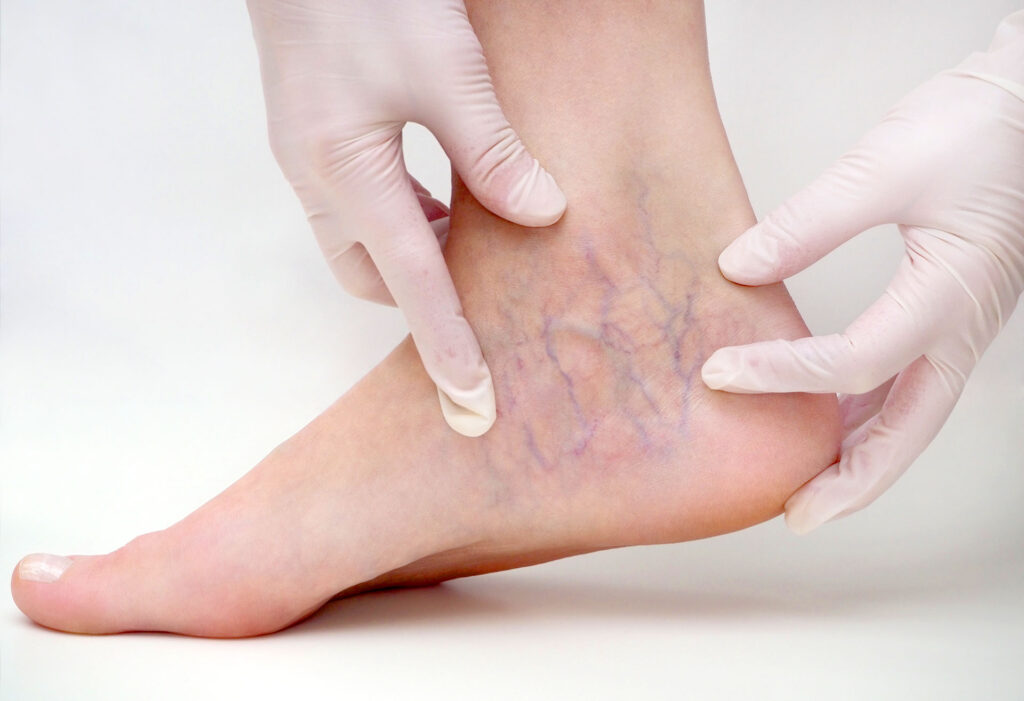
- Small, web-like clusters of red, blue, or purple veins (spider veins)
- Pain, aching, or heaviness in your legs, especially after standing
- Swelling in the ankles or feet
- Skin discoloration or itching around the affected veins
- Sudden appearance of new prominent veins accompanied by discomfort
If your blue veins are accompanied by any of these symptoms, it’s a good idea to consult a vein specialist who can evaluate your vascular health.
Spider Veins vs. Varicose Veins: Knowing the Difference
Two of the most common cosmetic and medical vein concerns are spider veins and varicose veins. Understanding the difference helps you determine the right course of action.
Spider Veins
Spider veins are small, thin blood vessels that appear close to the skin’s surface, often resembling a spider web or tree branch. They’re typically red, blue, or purple and most commonly appear on the legs and face. While usually harmless, many people seek treatment for cosmetic reasons.
Varicose Veins
Varicose veins are larger, swollen, and often twisted veins that bulge above the skin’s surface. They develop when valves inside the veins weaken, allowing blood to pool. Unlike spider veins, varicose veins can cause physical discomfort and may require medical intervention.
For those bothered by the cosmetic appearance of small visible vessels, modern medicine offers several effective solutions. There are numerous safe and minimally invasive spider vein treatment options that can dramatically reduce visible veins, including sclerotherapy and laser therapy, which can help restore your skin’s smooth appearance with little to no downtime.
How to Reduce the Appearance of Prominent Blue Veins
If you’re self-conscious about visible veins or want to prevent them from worsening, several lifestyle adjustments can help:
- Stay active: Regular exercise improves circulation and strengthens vein walls.
- Maintain a healthy weight: Excess weight puts pressure on your veins, particularly in the legs.
- Elevate your legs: Raising your legs above heart level for 15 minutes daily can reduce pressure and swelling.
- Wear compression stockings: These help promote healthy blood flow and prevent vein dilation.
- Avoid prolonged sitting or standing: Take breaks to move around throughout the day.
- Stay hydrated: Proper hydration supports overall vascular health.
- Protect your skin from sun damage: UV rays can break down collagen, making skin thinner and veins more visible.
Blue Veins Are (Usually) Normal
So, why are your veins blue? They’re not actually blue at all; it’s a beautiful trick of light, biology, and human perception. The combination of how light wavelengths interact with your skin and the deeper red color of deoxygenated blood creates the blue appearance we all recognize. For most people, visible blue veins are simply a normal variation of human anatomy and nothing to worry about.
However, if you notice your veins becoming painful, swollen, twisted, or accompanied by other symptoms, it’s worth consulting a healthcare professional. Whether for medical or cosmetic reasons, today’s vein treatments are more effective and accessible than ever, giving you plenty of options to feel confident in your skin.