
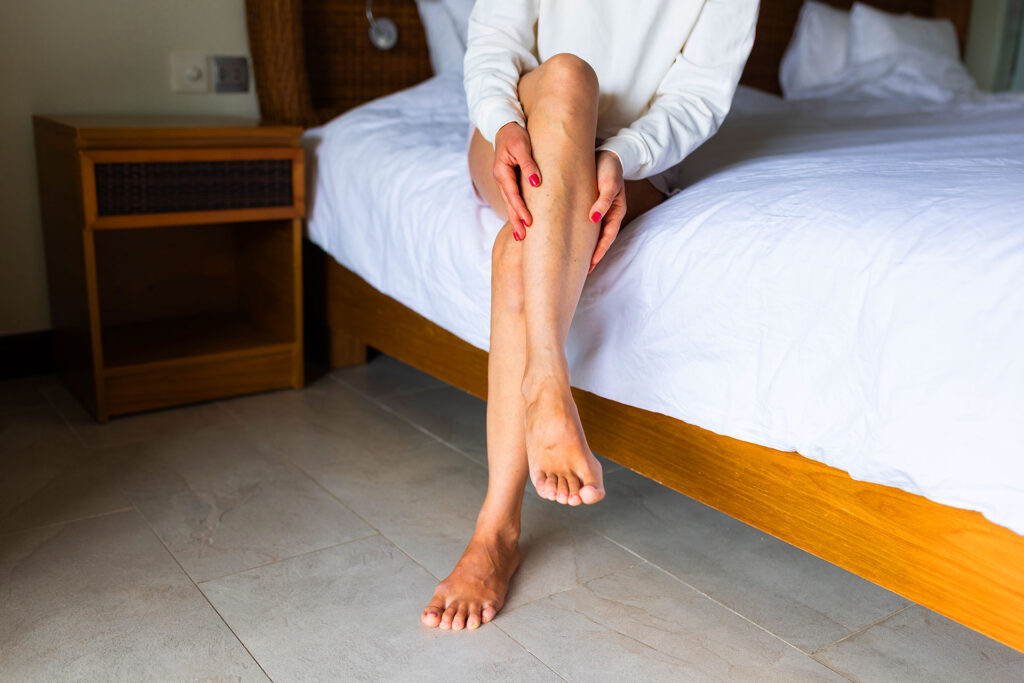
You’re standing in front of the mirror, staring at those rope-like lines snaking down your calf, and one question keeps looping in your head: is this normal, or should I be worried? Bulging veins in the legs are more common than you’d think, but that doesn’t mean you should just shrug them off.
Why do veins bulge in legs? Veins bulge in the legs when tiny valves inside them weaken or fail, allowing blood to pool instead of flowing back to the heart. This buildup increases pressure inside the vein walls, causing them to stretch, twist, and rise visibly under the skin, a condition known as varicose veins.
What Causes Veins to Bulge in the Legs?
Your leg veins work against gravity all day long, pushing blood upward with the help of one-way valves. When those valves get lazy or damaged, blood starts backing up. Over time, this creates the swollen, twisted appearance most people associate with varicose veins.
Several factors can speed up this process, including:
- Prolonged standing or sitting, which limits healthy blood circulation
- Genetics, since weak vein valves often run in families
- Pregnancy, due to increased blood volume and hormonal shifts
- Obesity, which adds extra pressure on leg veins
- Aging, as vein walls naturally lose elasticity over the years
Common Symptoms That Come With Bulging Veins
A bulging vein isn’t always just a cosmetic issue. Many people notice a cluster of symptoms that tend to show up together, especially later in the day or after long periods of standing.
- Visible, twisted, rope-like veins under the skin
- A heavy or tired feeling in the legs
- Swelling around the ankles or lower legs
- Itching or a burning sensation near the vein
- Throbbing or cramping, particularly at night
Does a Bulging Vein Always Mean Pain?
Not necessarily. Some bulging veins are purely cosmetic, while others come with real discomfort. If you’re experiencing aching, throbbing, or a heavy sensation alongside the visible bulge, it’s worth understanding varicose veins hurt and what that specific ache might be signaling about your vein health.
When Should You Actually Worry?
Most bulging veins are harmless in the sense that they won’t send you to the ER. But there are red flags you shouldn’t ignore.
See a doctor promptly if you notice: sudden swelling in one leg, skin that feels warm or discolored around the vein, an open sore near the ankle, or a vein that suddenly becomes hard and painful to the touch. These can signal blood clots or skin complications that need medical attention.
How Bulging Veins Are Diagnosed
Doctors typically start with a simple physical exam, checking the legs while you’re standing since gravity makes the bulges more obvious. If more information is needed, they may use a duplex ultrasound to look at blood flow and check whether the valves inside your veins are working properly.
This painless test helps determine whether you’re dealing with straightforward varicose veins or something that requires closer monitoring, like chronic venous insufficiency.
Treatment Options Worth Knowing About
The good news is that bulging veins are rarely something you have to just live with. Depending on severity, treatment can range from simple lifestyle tweaks to minimally invasive procedures.
At-Home and Lifestyle Approaches
- Wearing compression stockings to support circulation
- Elevating your legs for 15 to 20 minutes several times a day
- Staying active with walking or swimming
- Maintaining a healthy weight to reduce vein pressure
Medical and In-Office Procedures
- Sclerotherapy: A solution is injected into the vein, causing it to collapse and fade
- Laser ablation: Heat energy seals off the problematic vein
- Radiofrequency ablation: Similar to laser treatment, using radiofrequency energy instead
- Vein stripping: A more traditional surgical option for severe cases
Can You Prevent Veins From Bulging in the First Place?
You can’t completely rewrite your genetics, but you can absolutely slow things down. Small daily habits make a noticeable difference over months and years.
- Avoid sitting or standing in the same position for hours at a time
- Flex your calves regularly to keep blood moving
- Cut back on tight clothing that restricts circulation around the waist and legs
- Keep your diet rich in fiber to support healthy blood vessels
Frequently Asked Questions
Are bulging leg veins dangerous?
Usually not, but they can sometimes signal poor circulation or, in rare cases, a blood clot. If a vein suddenly becomes painful, hot, or hard, get it checked immediately.
Can bulging veins go away on their own?
They rarely disappear completely without treatment, though symptoms can improve with compression stockings, exercise, and elevating your legs.
Is it normal for veins to bulge more with age?
Yes. Vein walls naturally lose elasticity over time, and valves weaken, making bulging veins more common as people get older.
Do bulging veins mean I have varicose veins?
Most of the time, yes. Bulging is one of the primary visible signs of varicose veins, though a doctor can confirm this with an ultrasound.
Can exercise make bulging veins worse?
Low-impact exercise like walking or swimming actually helps. High-impact activities involving heavy lifting or intense straining can worsen symptoms in some people.
Final Thoughts
Bulging veins in the legs are usually more of an annoyance than an emergency, but they’re your body’s way of flagging that circulation isn’t working the way it should. Paying attention to symptoms, adjusting daily habits, and knowing when to see a specialist can save you a lot of discomfort down the road. Whether you’re dealing with mild visible veins or more noticeable swelling, understanding the “why” behind it puts you back in control of your leg health.